
Shell schemes and hired exhibition stands get lumped together because both are on the simpler side. And yet, they are not the same job.
A shell scheme is the organiser’s box, while a hired stand is a pre-designed build on a space-only plot. One is a dressing problem, while the other is a design-and-build problem that someone else might take over again after the show.
If you mix them in one brief, you will get two quotes that cannot be compared, and a stand that matches neither. This article explores how to avoid that.
What Is A Shell Scheme?
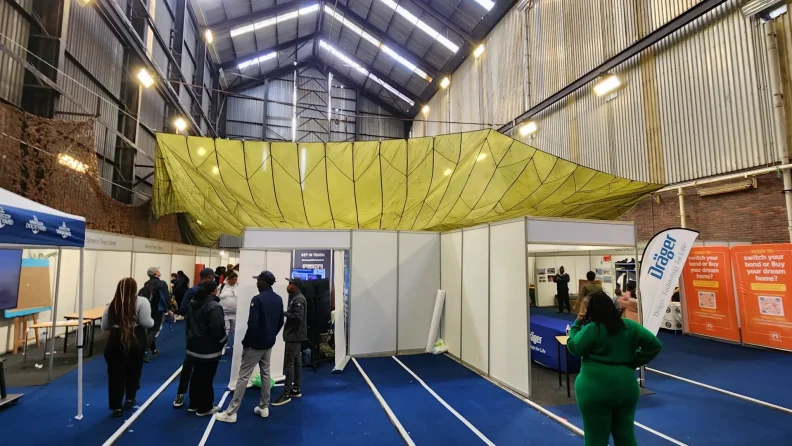
Most UK trade shows sell a basic shell: an aluminium frame, a fascia with your name, a standard carpet, and a power point if you’ve paid for it. The hall’s own contractor puts that up. Every neighbour looks roughly the same, until exhibitors start adding their own graphics.
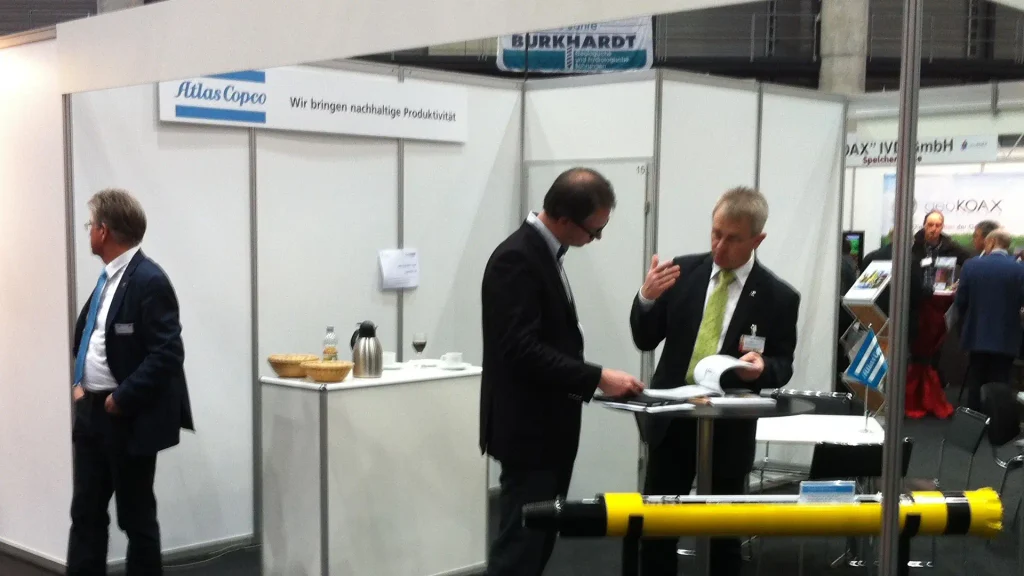
You can live in that box, or you can also ask a stand builder to upgrade it: better graphic walls, better lighting, a proper counter, or a ceiling where rules allow. The Booth Exhibits™ shell scheme page has more detail on this topic.
What you cannot do in a shell is pretend you have an expensive custom display. The walls are shared, height is limited, and storage is usually a curtain. Meetings end up happening closer to the aisle area, whether you like it or not.
Still, shell schemes have a place. They come in a format that suits plenty of new exhibitors. Success is possible by picking one message and lighting it, not by trying to rebuild a showroom inside a 3×3 box.
What Is A Hired Stand?
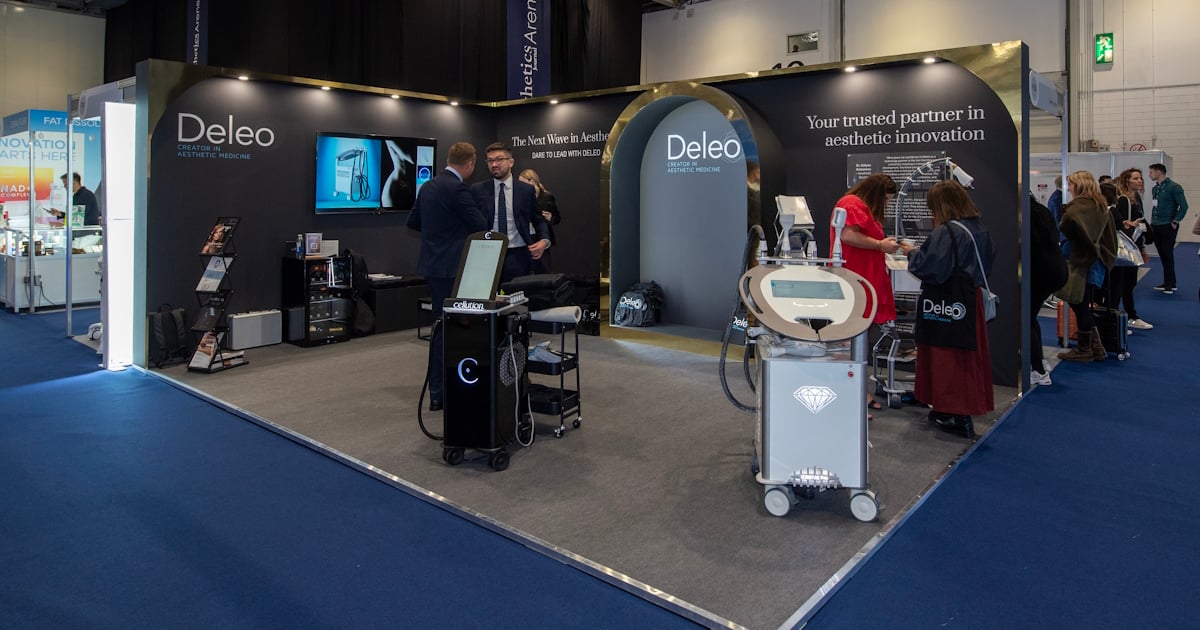
A hired stand, in the sense we use it here, means a contractor designs a stand for your space-only plot, builds it, and takes most of it away after. Everything above the tape marked on the floor is the contractor’s job.
That is why a hired stand can have a meeting room, an open corner, a store you can lock, and graphics that wrap a shape instead of hanging from an aluminium frame. It’s a bit more substantial than dressing a shell scheme cube.
Still, you do not own all of the kit. You won’t need a warehouse, assuming you’re using your stand once only. You’ll be paying for a designed result, not for a fascia board.
Some hired stands are stock layouts with new graphics, and others are planned to the plot. Ask which one you are buying: a stock kit can be the right call on a 3×3, but will frustrate you on a 6×6 island!
Where Does Your Money Go?
Shell scheme: you pay the organiser for space plus the shell package. Any upgrade is a separate invoice to an exhibition stand builder, usually covering graphics upgrades.
Hired stand: you pay the organiser for space-only, which is often priced differently to shell, and you pay the stand builder for the whole build. Space-only is not always automatically cheaper, as you’ve swapped a cheap box for a blank floor that still needs walls.

Either way, hall space alone is not the stand, so keep the invoices apart. The cost guide covers that split in more depth.
When Is A Shell Scheme Enough?
Choose a standard or upgraded shell when:
- The plot is small and inline
- You need to be on the floor with a clear message, not a room
- You’re exhibiting for the first time and need to see if it works for you
- You do not need a lockable store or a private meeting area
A good shell upgrade can look considered, but a bad one looks like A4 printouts in plastic sleeves. Budget for graphics and light, not just the structure.
When You Should Choose A Hired Stand Instead
If sales insist they need a meeting room on a 3×3 shell, a shell scheme just won’t cut it.
Hire the designed stand when a shell scheme clashes with the brief:
- You need meetings that are not shouted over the aisle
- You need storage that is not a pile under a table
- The brand cannot live inside a white cube
- The plot is a corner, peninsula, or island
- You will not own kit after the show, but you still need it to stand out
That last point is part of the whole hire case. You want the look of a custom stand or a purchased modular stand without keeping the crate afterwards.
Mistakes That Come From Mixing The Two
Some common mistakes we’ve encountered after years in the industry include:
- Booking shell space and then asking for an island design.
- Booking space-only and then arriving with roller banners.
- Asking three contractors for “a stand” and comparing a shell dressing to a hired 6×3 as if they were the same SKU.
Another one: leaving the organiser’s official contractor to do a “nice shell” the week before, then wondering why it looks like every other stand in the row. “Official” does not mean “designed for you”.
A Simple Way To Choose
Write down the one SMART objective the stand must do: stop people, run demos, or hold meetings. If a fascia and a counter can do that, start with a shell. If you need a room, a store, or a shape, you are in hire or buy territory.
Say which path you want in the first line of the brief. We can price a shell upgrade or a hired designed stand: book a call with the show, the plot, and that one job written down.
How Halls Treat The Two Formats
Organisers like shell schemes because they’re fast and evenly spaced. Space-only is slower and needs drawings, which can make an organiser’s life more difficult. If you book late, a shell scheme may be the only slot left that the hall will accept.
Space-only also means you inherit an empty floor and all the rules that come with filling it. Rigging, height, and complex structures are problems for your stand builder and the organisers. They know the rules inside and out, after all.

Staff Experience Is Part Of The Choice
A shell usually has no storage area, meaning coats and bags live in plain sight, whereas a hired stand can have the storage space you need for your booth staff to focus on their work.
Meetings in a shell scheme are mostly public. If the deal is sensitive, you likely need a private meeting room or a table off the stand. This all makes much more sense with a hired trade show stand.
What To Write In The Brief
Start with the format: “we have booked a shell scheme on an inline 3×3” or “we have a space-only on a 6×3 corner and want a hired stand.” Follow with the job of the stand and then the dates.
Attach the organiser’s manual if you have it, along with last year’s stand photos. Do not attach a moodboard of double-deckers if you booked a shell scheme!