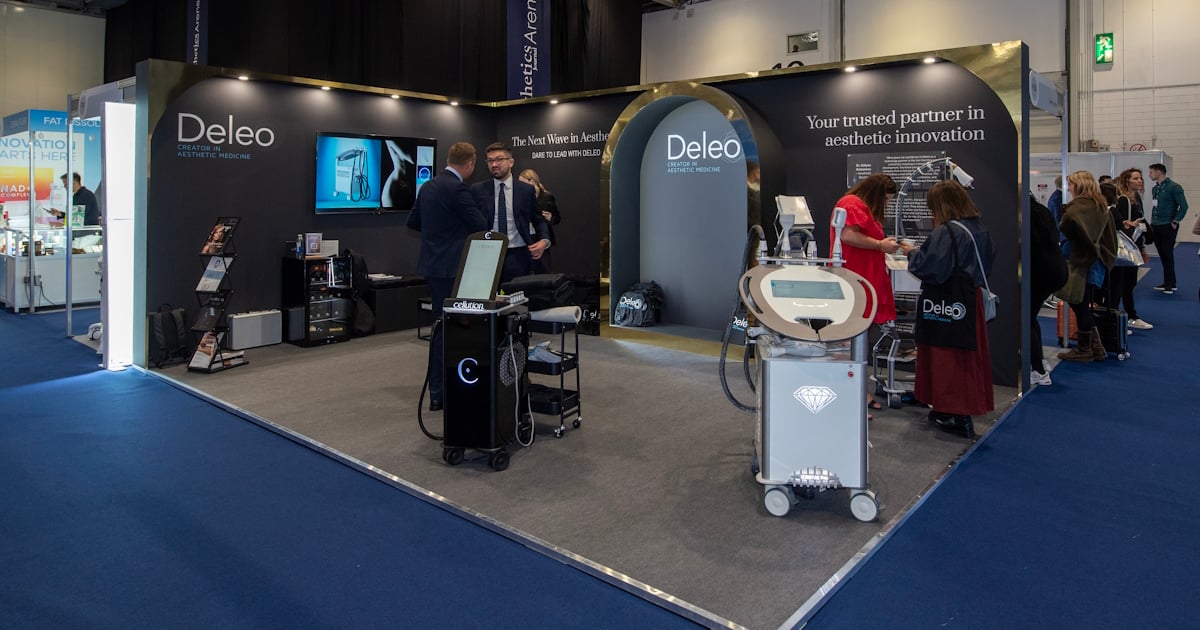

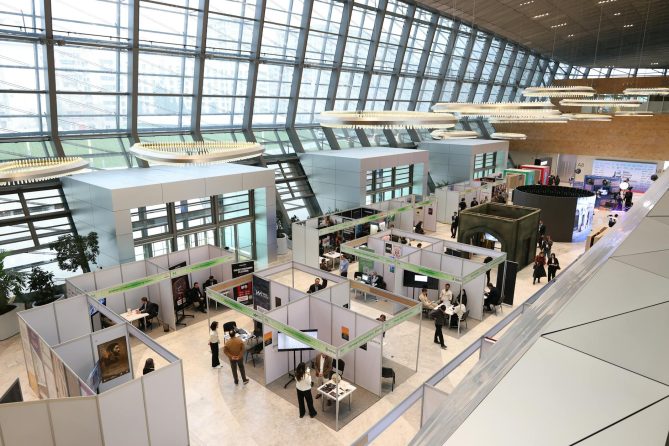
The stand is rarely the part of a show that breaks your budget. The charges that catch first-time exhibitors are the venue-ordered extras, electrics, rigging, internet, cleaning, furniture and storage, and almost all of them carry an advance-order deadline. Plan for them when you book the space, not when you arrive, and the show costs roughly what you expected.
If you have priced a stand but not the show around it, this is the gap. Here is what those extras are, how venues bill them, and how to get them into your quote instead of onto a surprise invoice.
Key facts
- Floor space is usually only about 25 to 30% of a total show budget; design and build takes 50 to 60%, and the rest goes on staffing, logistics and marketing.
- Power is not included in your space. It is ordered separately, supplied through floor ducts, and charged per socket and by the load you draw.
- Rigging must go through the venue’s in-house team, needs your organiser’s permission first, and at ExCeL has to be confirmed 28 days ahead for the advance rate.
- Internet is its own line item: Wi-Fi and a dedicated wired connection are priced separately, and wired is the safer choice for demos and lead capture.
- Most venue services have an advance rate and a higher on-site rate. Miss the manual deadline and the same order costs more.
What the space price does not include
When you buy floor space you are buying the square metres and, often, very little else. Typical UK space-only pricing runs somewhere around £300 to £600 per square metre at mainstream shows, though it varies widely with the show’s prestige and your stand type. That number feels like the cost of exhibiting. It is closer to the deposit.
Whether more is bundled in depends on what you booked. A shell scheme (the organiser supplies walls, a fascia name board and usually carpet) folds in some of the basics. A space-only plot is bare floor: you provide the build, the flooring, the electrical distribution and everything on top. The hidden charges bite hardest on a first space-only show, because the shell-scheme bundle is no longer quietly covering them for you. For the full picture on stand pricing itself, our guide to exhibition stand costs in the UK breaks down the build side.
The charges that quietly add up
These are the line items exhibitors most often forget to budget. None of them is truly hidden: every one is in the organiser’s exhibitor manual. They only become a surprise if you read that manual late.
| Charge | How it is usually billed | Watch out for |
|---|---|---|
| Electrics | Per socket plus the power load you draw, ordered from the venue or appointed contractor | A 24-hour supply if you run fridges or screens overnight; it is a separate, dearer order |
| Rigging | By the venue’s in-house team, quoted per rig | Needs organiser permission before you can even get a quote; rig lighting and power are ordered separately |
| Internet | Wi-Fi or a dedicated wired line, priced per connection | Free hall Wi-Fi rarely holds up for live demos; budget a wired line if you are capturing leads |
| Stand cleaning | Per day, per stand | Easy to forget on a multi-day show; floors get walked through fast |
| Furniture and flooring | Hire per item or per square metre | Space-only stands pay for carpet that a shell scheme would have included |
| Storage and logistics | Storage of empties, delivery handling, parking and passes | Where to put packaging during the show is a real cost, not an afterthought |
Venues sell plenty more as separate orders too: AV hire, lead-capture scanners, catering delivered to the stand, stand security and CCTV, water and waste, and compressed air for working demos. You will not need all of it. You do need to know it is priced à la carte before you commit.
The deadline trap
The bigger cost is often timing, not the service. Most venue orders have two prices: an advance rate and a higher on-site or late rate. The advance window is real and it closes. ExCeL, for example, asks you to confirm rigging 28 days before the event to get the advanced rate, and the NEC offers 10% off on-stand hospitality booked up to eight weeks ahead. Those exact numbers are venue-specific, but the pattern is universal.
Rigging is the sharpest version of the trap. It needs your organiser’s sign-off before you can request a quote, then the venue’s team to schedule it. Leave it late and you do not just pay more, you can miss the window to rig at all. Treat the manual’s deadlines as part of your project plan, not the fine print.
How to stop them being hidden
Two habits remove almost all the risk.
- Price the whole manual at the budgeting stage. When you book the space, open the exhibitor manual and cost every service you are likely to order, at the advance rate, with the deadlines noted in your calendar. This is the single biggest difference between an accurate budget and an optimistic one.
- Brief your stand builder properly. Tell them your power, rigging, internet and AV needs up front so they appear in the quote rather than as later add-ons. A good builder will know the venue’s quirks and deadlines and can order on your behalf. If you are new to all this, our first-time exhibitor guide walks through the wider planning timeline, and the UK stand regulations cover the rules that shape what you can build and rig.
Done well, none of these charges is a shock. They are simply the cost of the show, visible from the start and folded into one realistic number.
Plan the whole show, not just the stand
If you would rather not assemble all of this yourself, that is the point of working with a builder who has run hundreds of UK shows. Tell us about your show and your goals and we will scope a stand with the venue charges built in, so the quote you see is the cost you pay. Have a look at our projects to see the kind of stands we build, or book a call to talk yours through.