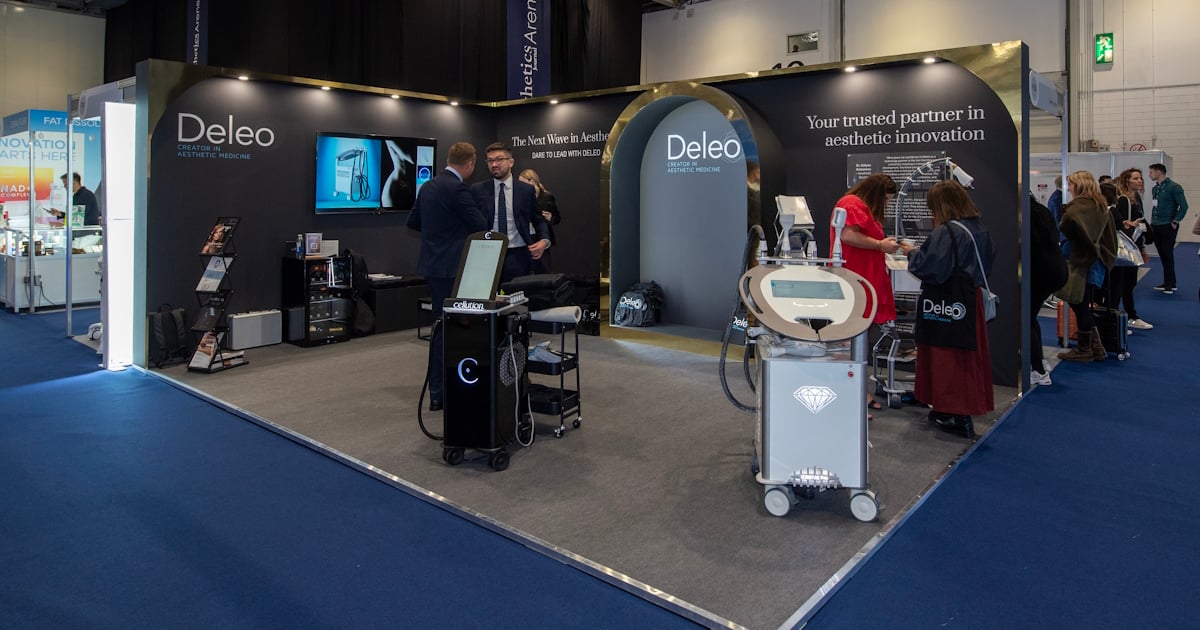

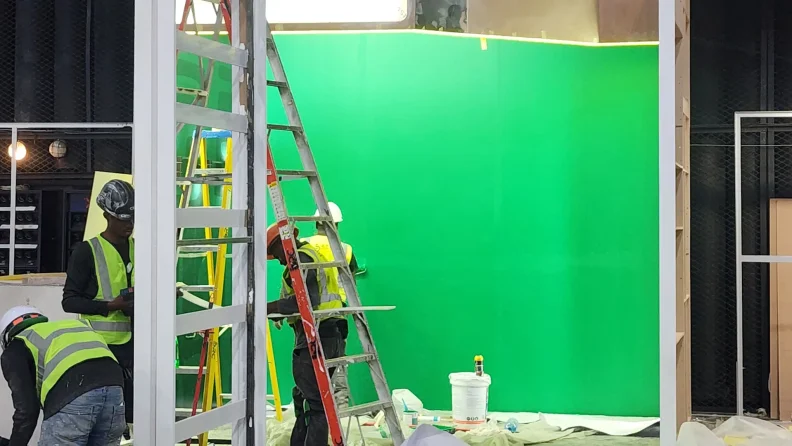
Choosing the right exhibition stand builder saves you more than just money. A stand that arrives on build day with missing panels, graphics printed at the wrong specification, or a structure that fails the show organiser’s compliance check is a guaranteed way to lose out at any show.
The UK exhibition stand industry has hundreds of suppliers, from one-person design studios to large design-and-build companies with their own fabrication workshops. The quality range is wide, and the cheapest quote is rarely the right answer.
This guide covers what to look for, which questions to ask exhibition stand contractors, and the red flags that warrant walking away.
The Four Types Of Supplier
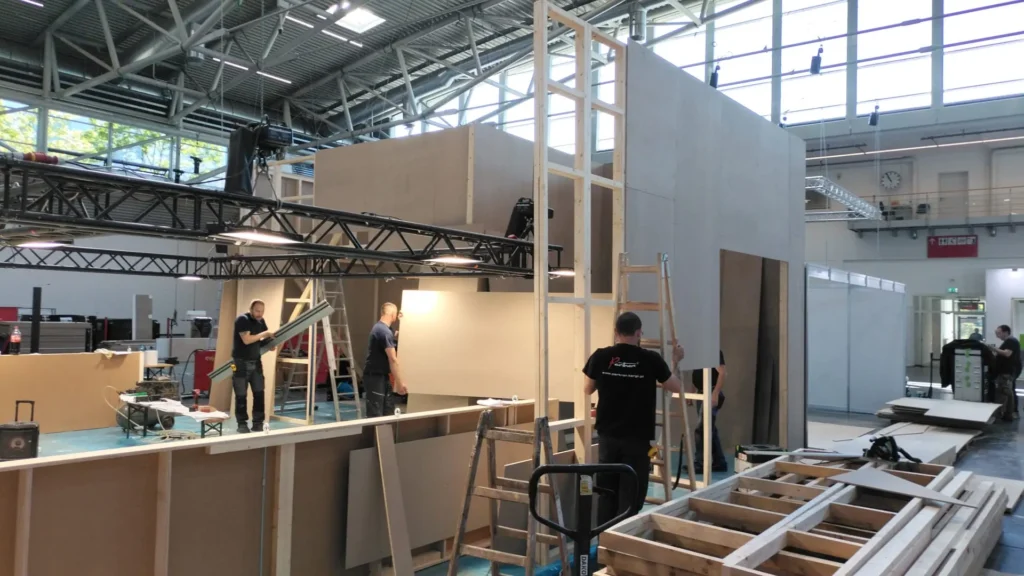
Before evaluating anyone, understand first what type of exhibition company you are dealing with:
Design-only Studios
These companies produce stand concepts and technical drawings, but do not actually build them. They hand off to a separate contractor for fabrication and installation. They’re useful if you have an existing relationship with a build contractor or if you want to separate the creative process from the build.
The downside of going with a separate exhibition stand design company? You manage two relationships, and when something goes wrong on-site, accountability is divided.
Build-only Contractors
These companies fabricate and install stands designed by others. They may have in-house joiners, metalworkers, and installers, but limited or no design capability. You’ll want to use a build-only exhibition contractor only if you have a designer producing the drawings and want competitive build quotes.
It’s not a common direct client relationship for most exhibitors.
Design-and-build Companies
In this instance, one company handles everything: design concept, technical drawings, fabrication, delivery, stand construction, and dismantling. Most UK exhibition stand work is handled this way.
The best part? There’s a single point of accountability. If something is wrong on-site, the same company that designed and built it is responsible for fixing it. This is our model at Booth Exhibits™.
Modular System Suppliers
These are companies that sell or hire stands built from a proprietary component system, usually built from aluminium profiles, push-fit panels, and other standard fittings. The stand is configured from their system’s parts rather than being custom-fabricated.
Some modular suppliers design and install; others sell the system and expect you to manage assembly. Modular system stands are faster to produce and cheaper per use when reused multiple times, but the design is constrained by the system’s geometry.
Most companies end up working with a design-and-build company for their core exhibition programme, sometimes supplemented by modular systems for secondary shows.
What To Look For In A Stand Builder
Here are some green flags you should keep an eye out for:
Portfolio Relevance
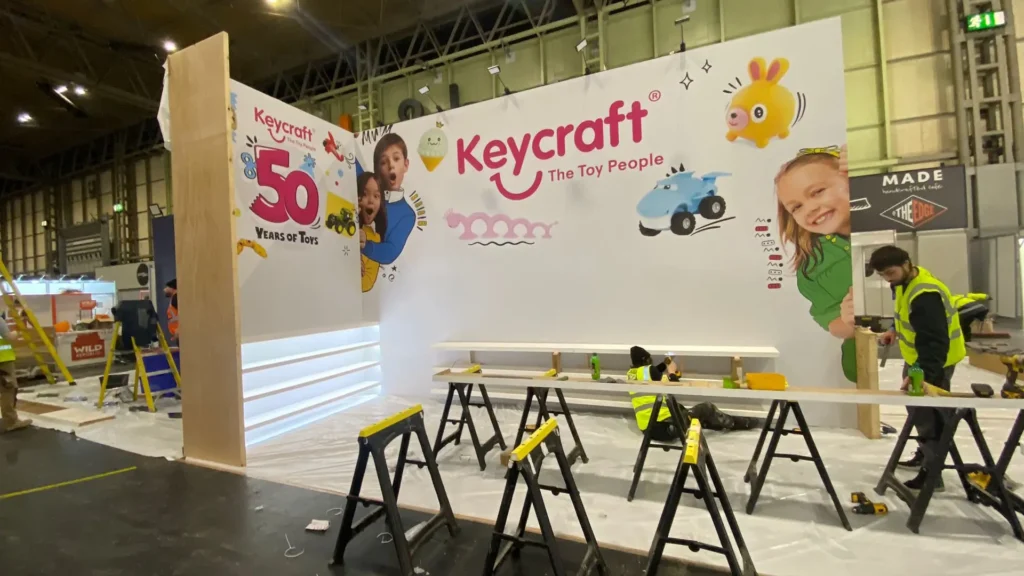
A builder’s portfolio tells you two things: what they are capable of, and whether they have experience with shows and venues similar to yours.
Take note of any:
Stands at the specific venue where you are exhibiting, such as ExCeL in London or the NEC in Birmingham. For shows in the capital, our exhibition stand builders in London can manage the venue-specific build rules and logistics. Each venue has its own logistics and compliance requirements!
Stands in your industry or sector. A builder experienced in pharmaceutical shows likely understands certain compliance requirements that a builder experienced in consumer shows won’t.
Stands at a similar budget level to yours. For example, a portfolio of £5,000 shell-scheme fitouts does not tell you what a builder can do for £25,000.
Lastly, ask to see case studies rather than just photographs of past projects. A photograph shows the finished stand; a case study tells you:
How the builder handled the brief.
What were the challenges?
What was the outcome?
UK-based Fabrication
Some stand builder exhibition companies outsource fabrication overseas. This is not always a problem, but it creates risks for quality control, lead times, and handling situations that require quick fixes. For UK shows, a builder with UK-based fabrication capabilities can respond to problems more quickly.
Ask directly:
Where is the stand fabricated?
Who does the fabrication?
Is the build in-house or subcontracted?
If subcontracted, is the contractor UK-based?
Venue Compliance Knowledge
UK exhibition stands must comply with construction regulations, show-specific height and structural requirements, and sometimes even listed building constraints (like at the London Olympia). A builder who knows the venue regulations for your specific show removes a significant risk!
Ask:
Have you built at this show before?
Who submits the structural drawings and risk assessments, you or us?
Do you hold public liability insurance of at least £5 million?

Installation And Dismantling Capability
Many builders quote for exhibition stand design and fabrication, but handle installation through subcontracted crews they have limited control over. The installation crew is the one who actually assembles your stand on build day, and their competence matters as much as the fabrication quality.
Ask:
Is the installation team employed by you or subcontracted?
Will the same person who project-managed the design be on-site during installation?
Aftercare And Storage
If you are investing in a modular or custom stand that you plan to reuse, you need a builder who offers storage between shows and can manage design refreshes without treating each reuse as a full new project.
Ask:
Do you offer storage? What is the rate?
How do you handle graphic refreshes between shows?
Good Questions To Ask When Shortlisting A Stand Builder
These questions should go to every builder on your shortlist, not just the ones you are unsure about:
Can you show me examples of stands you have built at [specific venue or show]?
Where is the stand fabricated? Is it built in your own workshop, or subcontracted?
Who submits the stand design drawings and risk assessments to the show organiser?
Who will be on-site during installation, your own team or subcontractors?
What is your process when something goes wrong on build day?
What does your quote include? Does it include delivery, installation, and dismantling?
What are your payment terms?
Do you carry public liability insurance? What level?
Do you offer storage between shows?
What is your lead time for a build like this?
The answers tell you as much as the portfolio. A builder who is vague about subcontracting, dismissive of compliance documentation, or cannot give a clear answer about who is on-site during installation is a major risk.
What A Stand Builder Quote Should Include

A complete stand builder quote should specify:
Design: Concept visuals, technical drawings, and revision rounds included or not.
Materials: What the stand is made of, including system type (if modular), materials specification (if custom).
Graphics: Format, substrate, print quality.
Lighting: Type and quantity of fittings; whether wiring is included.
Furniture: What is included, what is hired separately.
Delivery: To the venue, including loading-dock costs, if applicable.
Installation: Labour, crew size, and estimated installation time.
Dismantling: Labour, included or separately quoted.
Storage: Whether included or not, and for how long.
Compliance: Whether drawing submission and risk assessments are included or not.
Quotes that lack this detail and give a single headline figure without itemisation make it impossible to compare fairly with other builders.
Always insist on an itemised breakdown before accepting any quote.
How To Compare Quotes Fairly
There are three common mistakes when comparing stand builder quotes:
Comparing Headline Figures That Include Different Scopes
One quote may include delivery, installation, and dismantling. Another may quote fabrication only. A third may include storage.
Unless you break every quote down to the same line items, you are not comparing the same thing.
Choosing On Price Without Evaluating Production Quality
A cheaper quote may use lower-quality substrates, lower-cost lighting, or less-experienced installation crews. Ask to see physical samples of the materials specified, particularly for graphics and flooring.
A £500 price difference can produce a highly visible difference in finish!
Not Checking References
Ask every builder on your shortlist for references from past customers who have exhibited at the same type of show or venue. A reference from a client who exhibited at the NEC tells you more than a portfolio photograph.
Stand Builder Red Flags
Walk away or investigate further if you encounter:
No public liability insurance documentation when asked. Every professional stand builder operating at UK shows carries this. If they cannot produce it on request, do not proceed.
Quotes with no itemisation. A single headline figure is not a professional quote; it creates disputes and hides scope gaps.
No examples of compliance documentation. Risk assessments, method statements, and structural drawings are standard for any stand above a basic shell scheme fitout. A builder who has never produced them for a CDM-notifiable stand does not understand UK exhibition regulations.
Very low prices for complex builds. Exhibition stand fabrication has real material and labour costs. A quote that is dramatically lower than others for the same specification should prompt the questions: what has been left out, what is substandard, and/or what has not been accounted for?
Vague project management. If you cannot get a clear answer on who your point of contact is from the brief to build day, that ambiguity will compound throughout the project.
No on-site presence during installation. Some builders deliver a flat-packed stand and expect you or an on-site crew to assemble it. This works for simple modular systems where the assembly process is genuinely straightforward. For anything more complex, you want a project manager from the builder on-site during the build.
No proven track record. Assembling and designing exhibition displays is difficult, and hedging your bets on a supplier with a tiny portfolio is another huge risk.
UK Versus Overseas Stand Builders

Some UK exhibitors are approached by overseas stand builders, particularly European companies that operate at international shows and want UK clients. There are legitimate overseas builders with strong UK track records. There are also companies that quote very competitively, produce the stand in a country with lower labour costs, and then ship it to the UK with occasional quality or logistics problems. These are often difficult to resolve quickly.
The practical risk with an overseas builder? If something goes wrong on build day, the company is usually not nearby, so resolution can take longer. For your first show, or for a flagship show where the risk is high, UK-based fabrication is lower risk.
For repeat exhibitors with experience managing stand logistics, overseas builders can be a viable option for cost management. Just make sure you have seen their work at UK shows and that they can speak directly to UK-based clients.
The Brief Comes Before The Quote
The quality of your brief determines the quality of the quotes you receive. A vague brief produces vague quotes that are impossible to compare. A specific brief, including the floor plan, objective, budget range, and design direction, produces quotes that reflect what you actually need.
See the How to Design an Exhibition Stand guide for the full briefing process, and the How to Brief an Exhibition Stand Designer guide for the specific document to send to builders.
To start a conversation about your next show, contact the Booth Exhibits™ team with your floor plan and requirements, or explore Booth’s UK exhibition stand design and build services.