
Making Sure Your Leads Don’t Get Away!
Your event has just ended. You have a stack of badge scans, a pile of business cards, and a list of conversations that felt promising in a noisy exhibition hall. Now that the hall is empty, what you do in the next 72 hours determines most of the returns on your exhibition investment.
It’s a simple fact that most exhibitors do not follow up well. They certainly intend to, usually by putting their leads in a spreadsheet or a CRM. Then, the week after the show fills up with regular work, and the follow-up process gets relegated to a “to-do” when things quieten down. Finally, once things have actually quietened down, the lead has been contacted by your competitor, who simply moved faster.
Does this scenario sound familiar to you? If so, you’re in luck! Welcome to our guide on following up exhibition leads the practical way, where you’ll learn how to convert conversations you had into firm buyers in your pipeline.
The 48-Hour Rule For Lead Follow-up
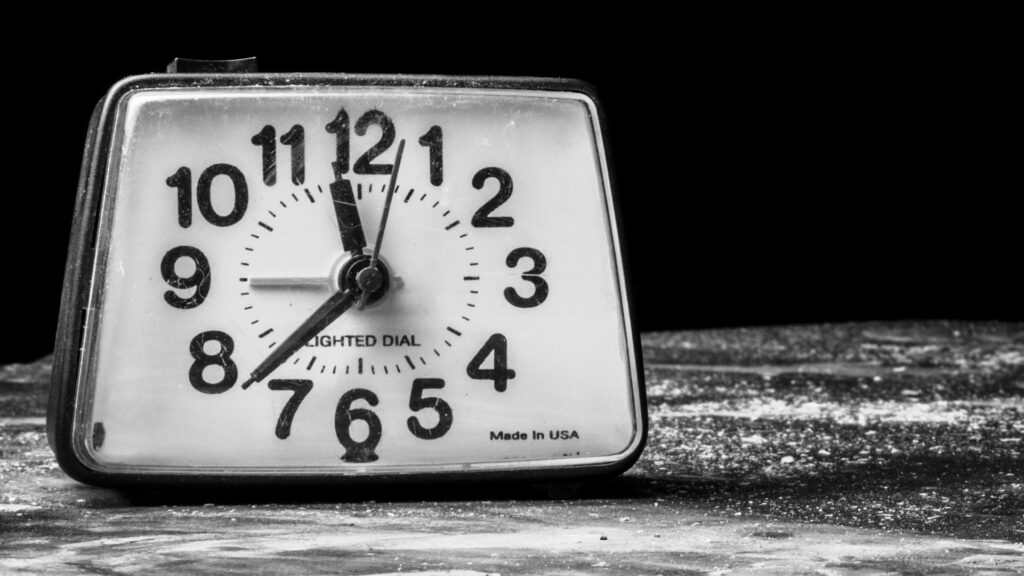
We’ll start with the numbers. There is a hard deadline for exhibition follow-up: 48 hours for hot leads, 5 working days for warm leads. Any longer and you’ll just be wasting your time.
After 48 hours, the context of the conversation fades for both parties. The pure specificity that made the conversation worth having becomes a vague memory. As for your prospect, their recollection of who you are and why they stopped at your stand competes with dozens of other conversations from the same show.
After 5 working days, show leads are well and truly cold. They are reachable, but require re-engagement from scratch. That means all the time you invested in your prior conversation just goes to waste.
The solution?Set firm deadlines for your post-show process, not aspirational targets.
Before You Follow-up: Classify And Prioritise
Before the show even closes, try to make a start on lead classification.
You can do this by taking every lead and assigning it to one of three tiers:
Hot: These are your decision-makers; they have a clear budget or buying intent and likely have a specific timeline discussed. You probably agreed on definite next steps at the show. Follow up with these leads personally within 24 hours of your encounter.
Warm: These are interested parties with a relevant company and role, but no firm timeline. Think of the common “we should talk further” type of conversation closer. Follow up with these leads personally within 5 working days of your encounter.
Cold: These are visitors who stuck to browsing or just have an unclear fit. They may have collected a badge, but had no substantive conversation. Sometimes their company was a good match, but had the wrong contact. All of these go into a nurture sequence.
Remember: the classification above determines the channel and urgency of follow-up, not the quality of your message. A cold lead gets a different approach, not a worse one!
Don’t forget to check any notes you captured during the show about the conversation. This is why capturing notes at your stand matters. A short record like “evaluating three suppliers, decision by end of June, main concern is lead time” is a completely different follow-up from a blank badge scan.
Follow-up: Hot Leads

Channel: Via personal email or phone, referencing the specific conversation you had, all within 24 hours.
What the message should do:
– Remind them who you are and what you discussed. Do not assume they’ll always remember.
– Confirm the next step you agreed upon.
– Make it easy to take that step.
What it should not do:
– Lead with a generic opener like “great to meet you”.
– Attach a large brochure or product catalogue unprompted.
– Be verbose.
Follow-up Email Template structure:
Hi [Name],
We spoke at [Show] on [day]. You were looking at [specific thing they mentioned].
As agreed, [next step you discussed — a call, a demo, a proposal]. I’ve [attached / set up / sent] [whatever that requires].
[Specific link to book a call / reply to confirm / proposal attached]
[Your name]
The reference to the specific conversation is a key element. Prospects are more likely to open and reply to something specific they remember, like “we spoke about your Q3 procurement review”. Meanwhile, a vague greeting like “great meeting you at [Show]!” is likely to be ignored.
If you agreed to specific next steps at your display, have them ready when you send the follow-up. Sending a follow-up that says “let’s set up a call to discuss” when you agreed to a demo in person is a huge downgrade.
Always deliver what you promised!
Follow-up: Warm Leads
Channel: Via personal email, within 5 working days.
Warm leads require a message that re-establishes context and offers a lower-commitment next step than a hot lead. They were interested but not committed.
Follow-up Email Template structure:
Hi [Name],
We met at [Show] – I was showing you [brief description of product/service relevant to their situation].
[One sentence on what your product does and why it is relevant to them specifically – use any context from your conversation notes.]
Would it be worth a 20-minute call to explore whether this could be useful for [their company / their team / the problem they mentioned]? I’m happy to work around your schedule.
[Your name]
While offering to describe your product further, remember to keep it brief overall. Warm leads are not ready to receive a full sales pitch, but they are ready to decide whether to invest 20 minutes in learning more. That is all you are asking for.
Nurture: Cold Leads
Cold leads are where you have a contact but no substantive conversation to build on. They aren’t worth a more personalised follow-up at this stage. The time investment is just too high relative to the likely return.
So, what should you do? Add them to a nurture sequence instead:
Step 1 (immediate): Add their details to your CRM with show attribution and an appropriate segment tag, e.g. “cold — [show name]”. Do not mark place them in the active pipeline.
Step 2 (2 weeks post-show): Add their contact to a nurture email sequence of roughly 4–6 emails sent over 8–12 weeks. Send them genuinely useful content, like case studies or news discussions relevant to their sector or role, rather than sales emails. The goal is to establish familiarity so that when they do have a relevant need, your name is in their consideration set.
Step 3 (3 months post-show): Review all the cold leads. Anyone who has engaged with nurture content, like your emails, gets promoted to a “warm lead” and gets a direct follow-up as per the section above. Anyone who has not engaged stays in the nurture sequence or is moved to the general marketing list.
Cold leads take longer to convert, but should require less individual investment. Let the system handle the work here, not the sales team.
CRM “Hygiene” After A Show
This is another part most exhibitors skip. It’s what makes the difference between a show that generates a measurable pipeline and one that generates a list of contacts you cannot report on six months later.
Within 48 hours of the show:
- Place every lead in the CRM, tagged with the show name and date. This is the only way to run a report in October that demonstrates what that event actually generated.
- Record/classify lead quality. Hot, warm, and cold should be attributed, ideally in a field that can be filtered.
- Set the next action and next action date for every hot and warm lead. A lead without a next action is not actually a lead, but rather a contact.
- Attach any conversation notes. Whatever notes you captured during the show must go onto the contact record. Context that lives only in someone’s memory has a half-life of about two weeks…
If your CRM process after a show takes longer than one hour per ten leads, your capture process at your stand was not detailed enough. The work of a good follow-up system is front-loaded to the show, not back-loaded to the office!
Measuring The Follow-up
Track these metrics for every show, at 30 days and 90 days after it happens:
| Metric | What it means |
|---|---|
| Hot leads contacted within 24h (%) | Whether your follow-up process is working |
| Hot lead to meeting conversion rate | How compelling your follow-up message is |
| Warm lead to conversation conversion rate | Whether your warm follow-up approach is working |
| Show lead to opportunity conversion rate | Whether the show attracted the right audience |
| Average time from lead to proposal | Whether your sales cycle from show leads is healthy |
These numbers compound over multiple shows. Once you’ve measured three shows consistently, you’ll have real data on which shows generate the best-quality leads, which follow-up approaches convert best, and where the drop-off in your pipeline is happening.
See the exhibition ROI Guide for the full framework for calculating what a show returned!
The Team Debrief
Within one week of the show, run a 30-minute team debrief while the show is still fresh for everyone. Here are some questions to answer:
- Which conversations felt most valuable? Why?
- Which did not convert to a hot lead despite seeming promising at the show? What was the signal we misread?
- What did visitors ask about most? Was there a topic or product that generated more interest than expected?
- What did competitors at the show appear to be doing well?
- What would we change about the stand, the pitch, or the follow-up process next time?
Write the answers down, not for a management report, but for the brief to your stand builder next year and for the follow-up system at the next show.
The Absolute Simplest Version
We get it, life can get busy. If the full system above is more than your team can execute for your first show, try to do the following as a minimum:
- Within 24 hours of the show closing, email every hot lead with a personal message referencing your conversation and confirming the next step.
- Within 5 working days, email every warm lead with a short personal message and a low-commitment next step (a 20-minute call).
- Add everyone to your CRM with the show name tagged.
These three steps take only a few hours, but will help you outperform 90% of exhibitors who do nothing systematic for two weeks after the show.